Small victories

I am now on my second laptop. They have both been Lenovos. I bought the first one while employed at RMIT. This meant I was able to salary sacrifice it, giving me a discount equivalent to my marginal tax rate, about 30%. This old one was much heavier than the present one, and was generally very reliable. (The technician who transferred the data from it to a USB stick said it was built like a tank.) Unfortunately, a couple of years ago, the fan decided to stop working. Because it was about 5 or 6 years old by then, it wasn’t possible to replace this part, and a new laptop was therefore indicated.

I got another Lenovo. Because I was, by then, a gentleman of leisure, this one was entirely on my own dime. All went well for a time, except that, a while ago, I noticed that the battery could only be charged to about 60% capacity. This didn’t matter so much because I kept it plugged in (more on this later). Then the new one stopped working altogether. While on the tram one day, I noticed a computer repair place just up the road. When I got home, I gave them a call.

They first informed me of their charges; $95, I think, for an initial diagnosis. This was rebatable if I got them to work on the machine. They had a look, and called me back. The hard drive was cactus. There were three options for replacing it, in ascending order of cost and desirability:

  1. the same kind of HDD, a mechanical one (the most old-fashioned type);
  2. a less expensive solid state drive; and
  3. a bigger and more expensive, Samsung SSD.

The last two options would have certain advantages, being much faster and more reliable. All options included installation of the drive and Windows 10, and recovery of whatever data was recoverable from the old HDD. (There wasn’t much to recover, as almost all files I create are stored in web-based applications.) I chose the middle option.

I am very happy with that choice. Now, at bootup, I don’t have to enter my password; I just have to click on the Sign in button. The machine starts a lot faster than before. Of course, I perform backups on a regular basis (yeah, right). Actually, I have OneDrive switched on, which allegedly uploads all modified files to a mysterious place in the cloud. (I accidentally wrote “in the clouds”. Is this place Valhalla? Nirvana? Atman? Is the cloud really just an expression of the collective unconscious? Time for another coffee.) 

The really good thing is that I have accidentally fixed the battery. All that was required was to use the laptop unplugged, to the point where the battery saver came on. Then plug it in until fully charged. Repeat the first measure. Now it is back to 100% capacity after charge. This is good because, in this model, a) the battery isn’t removable, so I can’t just buy another one, and b) I forgot to mention it to the technician when getting the HDD replaced.

I have the laptop now sitting on top of a wooden box about the size of a shoebox. I keep the mouse, USB light (for illuminating the keyboard), and memory stick in the box. The laptop sits on top regardless of whether it is being charged or not. The power board that it plugs into is just behind the box. I can reach everything from my chair in the study. These are small things, but it is surprisingly satisfying to have them sorted.

I also now have my power amplifier back from its second visit to the repair shop. This one was entirely my fault. I was baking some bread about a fortnight ago, and needed to raise the yeast mixture. This requires it being exposed to gentle heat for about 15 minutes. The amp gets pretty warm, so I put the bowl of yeast mix on top.  It was on a plate, and covered with glad wrap. However, I reckoned without the fact that, because that I was making two loaves at once, I was using double the quantity. It therefore expanded more, over the top of the bowl and the plate, forced its way through the glad wrap, and some dripped down onto the vacuum tubes. Some unscheduled noises alerted me that all was not right.

Several hundred dollars later, everything is fixed. It actually sounds better than before; I have also solved a minor but annoying issue with the stereo. It was making some intermittent kind of rustling, tinselly sounds through the left channel. I checked all the connections and tried unplugging various bits to see if they were causing interference. Among the bits I unplugged was the antenna — this has a little signal amplifier in it to improve the reception. None of these measures fixed the problem.

When I got the power amp back, I took the opportunity to re-site the transformer, and plug everything into a new power board. I plugged the antenna back in, and used it as intended to boost the signal from the tuner. Now the rustly-tinselly sounds have gone away. I’m not sure exactly what I did to solve the problem, but so far, so good.

Last weekend I went to the 3MBS book and record fair. Fortunately I had decided to leave the car up on Studley Park Road and walk the rest of the way to the Abbotsford Convent, where the station is located. This meant carrying a shoulder bag in which to bring back what I bought. By this means I both got my steps up, and inhibited my purchasing — knowing that whatever I bought, I would have to carry back up the hill.

I got

  • on vinyl:
    • a complete Hansel & Gretel, with Anna Moffo, Christa Ludwig, Dietrich Fischer-Dieskau, Arleen Auger, and Lucia Popp — what a cast!
    • Verdi Requiem
    • Bruckner 7 and Wagner Götterdämmerung suite;
  • on CD:
    • the complete Beethoven symphonies with Harnoncourt,
    • Songs of the Auvergne with Jill Gomez
    • Shostakovich 13 & 15 with Solti, and
    • the complete Debussy orchestral music with Boulez,

all for about $40! The vinyl is in much better condition than LPs from the op shop, some of which are very scratched. So I think I will be restricting my purchases of that format from the fair.
Rules are rules

When I wake up early, like before 5.00 am, and can’t get back to sleep, I think “Oh, OK, coffee with breakfast!”.  It is a small but genuine consolation for a night that was a bit light on. 

The coffee rule which I am invoking is: I have to have two teas before I have a coffee. When I need to get up early, I will make a tea then, and another one when I bring my beloved her coffee at 5.45 am. (This waking time is only on her work days — I wake her at a later time on her days off.) So on the days when I wake up earlyI have therefore had my two teas before I have breakfast, making a coffee with that meal permissible.

Why do I have this rule? It’s complicated. I really prefer coffee to tea. So if I had it all the time, I would have four or five cups of coffee a day, which seems undesirable. Limiting my coffee intake is a hangover from the days when my insomnia was really bad. Then, I used religiously to have only one coffee each day, at 10.30 am. I have since concluded that this doesn’t noticeably improve my sleep, and have thus relaxed the rule somewhat to have two or three coffees each day. Once I have had coffee, I don’t want to go back to having tea. 

This may not be very earth-shattering in itself, but it strikes me as a neat example of the little rules that we like to construct for ourselves. They go by several names: maxims, rules of thumb, heuristics. Many are relics from more leisurely ages: one for each person, and one for the pot. (Does anyone still make leaf tea any more?) Many old saws contain practical advice, like eating shellfish only in months containing the letter “R”, and planting your tomato seeds after Melbourne Cup Day. My beloved said her father put his in earlier, raising another rule: there are exceptions to every rule.

Then there are the proverbs that everyone knows: a stitch in time saves nine; look after the pennies, and the pounds will look after themselves. I remember a few bridge-related ones from Dad; always lead with the third highest of your longest and strongest suit: never trump your partner’s ace. And one, from a bygone era, that he loved to quote: there’s many a man walking the streets of London for not having played out his trumps.

There is a range of these sayings based on superstition: if you give someone a knife, they have to give you a coin, or else you’re symbolically cutting the friendship. Other sayings use rhyme as a mnemonic. In fourteen hundred and ninety-two, Columbus sailed the ocean blue. Thirty days hath September (etc. — I could never remember the bit about the leap year). Everyone will have their own examples — please add as a comment.

I find this plethora of little guideposts to daily life intriguing. How have they come to be so ubiquitous? As usual, I think there are several reasons. One is to do with efficiency. Practical rules do distill some useful experience. If you can’t remember when you changed the battery in your smoke detectors, you may as well do it every Easter. Shellfish apparently can taste different when they are spawning. In the Northern Hemisphere, the months-with-an-R-in-them rule is a handy mnemonic to avoid this season. (In Australia, according to Richard Cornish’s column, this doesn’t apply.) The same with planting your tomato seeds. Rules of this type give a handy mental hook on which to hang a fact that would otherwise swim away. (This, of course, was from a pre-Wikipedia era, when everyone was expected to have “general knowledge”, whatever that was.)

Food is something that is both rule-ridden, and reflective of social change. Mustard with mutton is the sign of a glutton — guilty as charged! Red wine goes with meat, white with chicken or fish. A meal isn’t complete without bread. Mealtimes now are vastly different to when most of us were growing up. There is obviously a much greater range of foods consumed in Australia and New Zealand, and much less of that food is made in-house. It is also consumed in a much more hedonistic way; food is now seen as something interesting and pleasurable. Back in the day, some households operated an immutable seven-day menu. Saturday was roast day. Sunday lunch was leftovers from the roast with salad; dinner was scrambled eggs. Monday was a casserole, and so on. 

These kinds of arrangements reflect the good and bad aspects of rules. Having a rule is reassuring in the same way that habits are. Rules can provide not only useful guidance, but also a sense of continuity in a world that can feel hostile and overwhelming. They can also be boring and constraining. In this way they are a bit like the Queen’s Christmas message. One might like the fact that HMQ is still pegging along and giving us her take on things, but her comments are often so anodyne as to be pretty dull. (Just the thing after a day’s epic consumption!)

Having just finished reading Willpower, by Roy F Baumeister and John Tierney, I have a another explanation for rules. The main function of rules is to simplify the decision making process. Having to make a lot of decisions leads to a state known as decision fatigue(I think this is similar to cognitive overload.) Anyone renovating a house, or who has looked at a number of properties, will have experienced this state. Decision fatigue leads to impulsive decision-making: you just want to get it all over with. This in turn makes bad decisions more likely.

Back to my tea and coffee rule. The obvious question is: why don’t you just have what you feel like? That actually involves more work in that I have to make this decision several times a day. If I do that all day, I’ll spend all my decision-making energy on this little stuff. I’ll have nothing left in the tank when I get to the big decisions.

Sounds fanciful? Baumeister and Tierney’s main contentions are:

  1. You have a finite amount of willpower that becomes depleted as you use it.
  2. You use the same stock of willpower for all manner of tasks.

A large number of experiments have confirmed these statements. One early piece of research is known as the radish experiment. Students, who had been fasting, were assigned to one of two groups. Each group was put into a lab with freshly-baked chocolate biscuits, chocolate, and raw radishes on the table. One group was told they could eat anything, the other group told only to eat the radishes. Both groups were then given a large number of difficult geometry problems to solve. The chocolate biscuit group persevered longer than the radish group. This confirmed the hypothesis that the willpower of the radish group would be eroded by refraining from eating the biscuits and chocolate.

Ever tried to compare phone plans or health insurance? The tasks are so difficult one soon hits decision fatigue. Given that this results in most people staying put, it’s not hard to see how this state of affairs is in the interest of the telco or health insurer. There have recently been reactions against all this complexity. Health insurers have been forced to offer bronze, silver and gold plans. Some telcos offer basic plans, as well as ones with the lot. And in fashion, there is talk of the capsule wardrobe; a collection of garments in a restricted colour palette, all of which go with each other.  One may not take Mark Zuckerberg’s advice in many facets of life, but he has a relevant sartorial rule. He only has T-shirts in one colour: grey marle. This way he gets to leave the house with his decision-making mojo intact. Your time starts now: tea or coffee?

The knock on the door

Dmitri Shostakovich did pretty well in the ABC Classic 100 competition recently, coming in at number 24. (He even beat Haydn — and Wagner! I think this would have appealed to his sense of irony.) Although he had never been a favourite composer of mine, I have been listening to his music a fair bit lately. There are several reasons for this, which came to light one after the other.

I had been hearing some of the Shostakovich symphonies, both on the radio and on vinyl. (The latter was via his son Maxim’s recording of the Fifth Symphony.) So I ordered a complete set of the symphonies several months ago through Readings, courtesy of the generous birthday voucher from my sister — thanks, Jane! The set is conducted by Mariss Jansons, and features several Russian and western orchestras. Jansons is Latvian; his father, Arpad, was also a conductor, and a contemporary of  Shostakovich’s. So Mariss Jansons literally grew up with this music.  He rates Shostakovich on a par with Mahler as a symphonic composer. 

Soon after this set arrived, I went to a lecture at the University of the Third Age in Hawthorn about Shostakovich. This was given by Zoe Knighton, cellist of the Flinders Quartet. (Incidentally, Zoe listed Julian Barnes’ novel about Shostakovich, The noise of time , on her reading list.) 

As one might expect, her talk concentrated on Shostakovich’s fifteen string quartets. However, it also touched on several significant events in the composer’s life, notably a performance in 1936 of his third opera, Lady Macbeth of the Mtensk District. Stalin attended this performance, but evidently found it extremely offensive, and walked out. (Interestingly, he sat through three of its four acts before doing so.) Afterwards, Shostakovich was publicly criticised — along with other Soviet composers — for not writing “music for the masses”, or proletarian music. Such music was simple and direct, and positive in its emotions. Shostakovich’s Ninth Symphony is an example of this approved style of Soviet music. 

After the denunciations, a newspaper article called “A Soviet artist’s creative response to just criticism” was issued under Shostakovich’s name. The article was a mea culpa, acknowledging the charges that had been levelled against him. Shostakovich changed his style, withdrew his Fourth Symphony, and concentrated on writing film scores.  In spite of these actions, he was dismissed from his position at the Moscow Conservatory, his family’s privileges were withdrawn or curtailed, and he spent the rest of his life in fear of being arrested. It was from this time that he famously kept a bag packed by the side of his bed, in readiness for the knock on the door late at night or early in the morning from the secret police. 

Around this time I went to a performance in the Balwyn Cinema of the Shostakovich opera that Stalin found so offensive, Lady Macbeth of Mtensk(The opera is not based on the Shakespeare tragedy, but on a contemporary novel by Nikolai Leskov.) This was a recent performance from the Paris Opera — the review from Limelight gives the flavour of the production. It featured the Lithuanian soprano Aušrinė Stundytė in the title role, and several Russian singers in the supporting parts.

Shostakovich had intended Lady Macbeth to be the first of a trilogy about the position of Soviet women. (Not surprisingly, the remaining two operas were never written). He and the librettist obviously felt that this position was an unenviable one. As the Limelight review observes, it is “packed to the gills with sexual violence and murder”. The music would have been enough for Stalin to dislike it, being often dissonant, sarcastic, and uncompromisingly modernist. He would have also been irritated by the libretto, which takes potshots at various aspects of Soviet society. Lady Macbeth turned out to be Shostakovich’s last completed opera. I thought it was a magnificent and stunningly original work.

The knock on the door in the middle of the night that Shostakovich expected never came. Things eased for him, particularly after Stalin died. He was protected to some extent by his music being well known in the West. Nevertheless, the anticipation of his impending arrest cast a shadow over his life. (Apparently Shostakovich told a friend he had felt anxious for years.) This is reflected in his music, which can sound either emotionally numb, or as if it is struggling to contain a rising tide of hysteria.

Shostakovich’s music, however, is about more than his own anxiety. Jansons thinks the Second World War is essential for understanding the Seventh (“Leningrad”) and Eighth symphonies. The Thirteenth Symphony (“Babi Yar”) sets the biting satire of Yevtushenko’s verses, which critique the anti-Semitism, the fearfulness, and the timidity of Soviet society. “They’re forgotten,/ the ones who hurled curses, / but we remember/ the ones who were cursed.” In this work Shostakovich seems to express the anguish of his compatriots at the repression, the show trials, the denunciations, the exiles. Maybe this is one reason why his music was popular with Soviet audiences — even challenging scores like Lady Macbeth — despite the political risks involved with playing or listening to it. The denunciations missed the crucial fact: Shostakovich was writing “music for the masses” all along. (Is this the most piquant irony of them all?)

Shostakovich may not be a barrel of laughs, exactly, but he is not all doom and gloom. To Jansons, the extended C major chord at the end of the “Leningrad” symphony

… is not the end — not victory; the struggle will continue. This is the Shostakovich phenomenon; he shows optimistic elements, but at the same time something disturbs one.  [Interview with Mariss Jansons, in CD booklet, Dmitri Shostakovich — The Complete Symphonies. EMI 0946 3 65300204]

Would we be convinced by a rousing finale nowadays, though, like that of Beethoven Fifth Symphony? Ours is the age of anxiety. (W H Auden and Leonard Bernstein certainly thought so; both used the title for a long poem and a symphony respectively.) Shostakovich’s music is that of someone who has had many dark nights of the soul — but endures.

There is a literary allusion I cannot track down, in one of the George Johnston novels. As I recall, it is along the lines of “And then he went on as if nothing had happened”. Since the end of the chemotherapy, I have been trying to do just that, and have a normal life. I imagine Shostakovich trying to do the same. 

I have it much easier than Dmitri did. Once a dictator takes a dislike to you, there is not much you can do about it. I have a fabulous team devoted to keeping me in a well state. I am being supported with great love. Everything is going as I might hope. Nevertheless, I think of Shostakovich in his apartment (as depicted by Julian Barnes), listening intensely every time the lift doors opened on his floor.  

Palaces for the people

I read a really interesting interview in The Economist this morning with Eric Klineberg, author of a forthcoming book, Palaces for the people. (Before I go on, the link quoted sits behind a paywall. I have a free trial subscription to The Economist, which is how I came to read this article. I try not to link to articles which are not publicly available, but this one I thought exceptionally interesting. The article includes an excerpt from the book. There is also a Google preview of the book, available here .)

The author says about libraries

Libraries play an especially important role in promoting democratic culture—and challenging authoritarianism—because of the way they are staffed, managed and programmed. They are radically inclusive. They are governed by professionals who abide by powerful vocational norms: pursuing knowledge with the best tools at our disposal; being non-judgmental; respecting the dignity of all persons; maintaining privacy; treating everyone, regardless of social class, race, ethnicity, age, ability or citizenship status as equals. If, on one side of the battlefield, demagogues and tech titans are pushing us towards a post-truth era, on the other, librarians are pushing back. [ … ] But I fear that we are starving our libraries just when we most need them.

While libraries appear to be in the gun sights of local government and university administrators, they are popular with the punters, and not just oldies like me. The interview refers to some Pew research data that found about 50% of millennials in the United States have used a library in the previous 12 months. This makes them the group most likely to use libraries. (This research is available in full text thanks to a grant from the Bill and Melinda Gates Foundation. So, a shout-out to them.)

Of course, by “libraries”, the Pew report and Klineberg are mostly talking about public libraries. University libraries, actually, are more open than one might think, although this was not publicised. Anyone could walk in and read at RMIT library. A library card giving borrowing access to books was available for a fee. (This card did not include access to online databases or e-books.)

As a footnote, people did make use of the library in surprising ways. There were one or two who used to hide during the nightly clearing process, unroll a sleeping bag, and have a kip between a couple of rows of shelves. An attendant was once clearing the library following a fire alarm or bomb threat (I can’t remember which). He found a little girl sitting quietly at one of the desks. When he asked her whether she had a parent in the library, she explained that her mother had left her there and told her not to move. The attendant had no choice but to take the girl with him to the evacuation point. When she was reunited with her by now rather distraught mother, the latter explained that she had thought the library was a safe place to leave her daughter for a while while she went to an appointment nearby. (This was a bit like leaving a child unattended in Myer or David Jones.)

I’ve got a little list; I

While wrestling with this post before, my broadband decided to have a bad hair day.  (It has since been restored — ditto the laptop.) Anyway, if you got an earlier version of this post, it was because WordPress decided to publish it prematurely.  Apos for that, as the young folk say nowadays, or did once.

I have been thinking about lists recently. I haven’t just had bucket lists in mind, as per the previous post, but other kinds too, especially literary ones. I was struck by the 100 greatest novels sort of list. I started looking at 100-greatest lists, as I will refer to them, to see if I’d read what the compilers recommended. Then I started thinking about what was going on with these lists and why they existed. These thoughts have become somewhat protracted. So in trying to stop this feeling to much like a thesis, I have split it into two posts, the first of which follows below(I give some further examples at the end of the second post — yes, a list of lists). 

I did read a somewhat cynical explanation of why listicles, as they are known, have become popular. This is because journalists find them easier to write than articles. Writing an article forces a journalist to think about how to make the final sentence link up with the opening one. Much easier to make a list! However, I think there’s more to it than that. Three reasons in particular come to mind.

The first is a conviction that reading is intrinsically good for you. Of course, just because something is intrinsically good for us doesn’t make it fun. Reading — particularly from a printed page — is the broccoli of leisure activities. Nutritious, for sure, but not something one gets a craving for. No-one has to make a list with things on it like “Have a coffee and some chocolate”.

But it isn’t just reading that’s supposed to be good for you: it’s reading on a printed page. The book is competing for our attention with the convenience of the screen. Sitting on the train, in the doctor’s waiting room, or in the spare half hour while a load of washing finishes its cycle, it is easier to find time for reading a few bits and pieces on the phone or tablet than it is to sit down with a novel. There is some uneasiness about what this extra screen time might be doing to us; there have been a few articles recently about how to read more hard copy books. Want to read more? Choose an extremely long book is an example.

The second reason is a feeling of helplessness and hopelessness about what books people should be reading. People seem to feel that bestsellers and airport books are literary equivalents of junk food. They want to read the good stuff. But how do they know what this is? There are no Choice tests they can read to get onto the best books. People have a lot of demands on their free time; just futzing around on their own could waste what little they have. There seems a real craving for guidance, for someone to tell them what to read, and where to start.

The third reason behind 100-greatest lists is the hardest to pin down. What do people think they’ll get, or gain, from all this reading? There is a vague belief that working your way through a 100-greatest list will make you well read, a member of the cognoscenti. You may not have a degree to say so, but who needs one? You’ll be not only be a better person intrinsically, but a more evolved one as well, sort of like reaching the Scientology state of “Clear”.

The post continues below.


I’ve got a little list; II

There is a creeping competitive, credentialist aspect to this 100-greatest list business as well. The big daddy of these lists, The Guardian 1000 novels everyone must read, leads with the minatory question “How many of these have you read?”. (This aspect, of the 100-greatest lists as a test of character, is possibly related to the reading-is-good-for-you reason I identified in the previous post.) After working one’s way through this terrifying list, one could surely lay claim to being A Reader. Reading would then be something that one has objectively and verifiably “done”, and could tick off one’s list, for good! (Ah yes, as the uncle in The Cherry Orchard is fond of proclaiming, I went in for that a good deal as a young man.)

There has been a backlash against the whole idea of 100-greatest lists. An example is an article (also from The Guardian),”We should ban the ‘best of’ end of year lists – they make us feel guilty and old“. Criticism of Robert McCrum’s The Guardian 100 greatest novels published in English list is also contained in the Wikipedia article about it. This centred around the under-representation of women and Irish authors — 21 and 9 respectively. (Incidentally, two Aussies got a guernsey — Parick White and Peter Carey.)

My main objections to 100-greatest lists are the arbitrariness of the parameters and the subjectivity of the selection. Take the parameters  first. These lists are usually, in practice if not explicitly, “100 greatest novels In English“. (Kudos to McCrum for being upfront about that.) But why limit the list to fiction written or published in one language? Okay, most native English speakers are monoglot. But why exclude fiction originally written in other languages, which has been translated to English? Can a 100-greatest novels list exclude Don Quixote, In search of lost time, Madame Bovary, The brothers Karamazov, and War and Peace, for starters?

The difficulty of the selection is more obvious when you set yourself the task of  designing an English literature curriculum from scratch. Who would you put in? Most people would say, Shakespeare. After that, there is less agreement. Milton? Oh, yes, absolutely — although no-one actually reads him, any more, do they? Dickens? Yes, OK. Henry James? Ah — righto. George Eliot? Bit stodgy, isn’t she? Hang on, you have to leave her in. Otherwise you’ve just got dead white males. The Authorised Version of the Bible? That’s a bit political. As you go past Shakespeare, there is less and less consensus, and everyone will have their favourite candidate to include or exclude.

The commodification of reading that underlies many 100-greatest lists is one reason to be uneasy about them. The links in The Postmodern Mystery Reading List (the first list in the examples I give below) point to Amazon. Does this represent a potential conflict of interest for the compiler? Would he or she include a title that, for some reason, wasn’t available on Amazon?

These things don’t have to be monetised. The assumption that this is the only way to do it is part of the neoliberal agenda. How much better would it be if these links pointed to the local library? Literature-oriented web resources like LibraryThing include a link to a resource called WorldCat on most pages. See this page for an example; the WorldCat link is in the right hand side bar. (If you have no interest in searching your local library catalogue, skip the next couple of paragraphs.)

WorldCat may require a one-off registration, in which one’s location is disclosed. There is no problem with doing this. OCLC has been around since I did librarianship about fifty years ago. As they stylishly explain, OCLC is “a global library cooperative that provides shared technology services, original research and community programs for its membership and the library community at large.” Clear as mud? Just give them what they are asking for. You won’t end up on someone’s mailing list. (A tip — to find your library, try putting in the name of your local government area, rather than your suburb or town.)

Once you are registered, put in a book title. If it is held in a library within coo-ee, you will — with some persistence — see a listing for it. WorldCat is clunky as to use. But, and it’s a big but, it gives a low-cost or free alternative to Amazon for getting your hands on a book.  You may have to use interlibrary loan, for which some less enlightened library services charge a few dollars. But that’s surely less than the book would cost to buy.

In having a shot at 100-greatest lists, I am not trying to be a literary snob, or implying that people should somehow just know what to read. The republic of letters is open to any literate citizen. I am fortunate enough to be able to do a lot of reading, and it is very important to me. People need to use whatever works for them to get the most out of their reading. If this includes 100-best lists, go for it!

“Great books” courses, to me, are another kind of 100-greatest lists. They are pretty popular in certain circles. Melbourne University is running a short course, 10 Great Books 2019. Wrong number, same idea. Sydney University was supposed to be running a Great Books program, funded by a neoconservative outfit, the Ramsay Centre. The article from the SMH traverses the culture wars controversy that accompanied the discussion about the course. My recollection is that the university and the Centre couldn’t agree on how it was to be done.  I found a Honi Soit article (imagine Honi being online!) that seemed to cast doubt on whether the program was to proceed or not. If anyone can cast light on this, make a comment, or let me know.

Below are some examples of 100-greatest lists. These all open in a new tab. None of the articles they point to is behind a paywall, to my knowledge; some may require free registration. (To find more, just do a Google search on “books to read before you die”.)

Other questions that could be asked of 100-greatest lists include

  1. What are the criteria for inclusion? Are they just books that the compiler likes?
  2. What expertise does the compiler have in the topic?
  3. What is the rating system by which books are assessed?
  4. What did the process by which the list was compiled, involve? For example, how many books were read?
  5. Are only books originally published in English considered? Why?

http://www.postmodernmystery.com/reading_list.html

http://www.greatbooksguide.com/ArtofFiction.html

https://www.goodreads.com/shelf/show/100-books-to-read-before-you-die

The 100 best novels written in English: the full list

From Agatha Christie to Gillian Flynn: 50 great thrillers by women

Top 10 books about angry women

Tales of the unexpected: 10 literary classics you may not have read


More of the same

I saw my oncologist, Philip Parente, this morning, for our regular six-weekly appointment. The big news is no news: my PSA is still undetectable. So everything is as it has been the last few times. (The appointment was followed by another at the oncology unit at Epworth Eastern for another Zolodex implant. This was similarly uneventful.)

Everything can now resume its formerly pleasantly mundane character. We are having our laptop fixed, the hard drive having pretty much died. Conveniently, there is a technician up the road from us. This will be a few hundred dollars, but cheaper than a new one would be.

Another issue is nearing completion. In February I ticked off another item on my bucket list (more on that later) and bought a pair of RM Williams boots. Because I have orthotics, they had to be a particular model, the Dynamic Flex, in the Craftsman range. This is the only model that RMW makes that has a removable insole. They are very well made boots, as you would expect for the price, but the fit hasn’t been quite right for me. I have been trying various combinations of insoles, including the ones that RMW supplies, and been getting occasional rubbing on my toes. (This might be due in part to my feet swelling up with the lymphedema.)

So OK, my bad for buying the wrong thing. However, I had been told when doing so that the Dynamic Flex only came in a G (normal) fitting. I subsequently found out that they also come in an H (wide) fitting.  Had I known this to be the case, I would have tried these on as well as the Gs. I looked up the receipt, and there was a link printed on there to send them my feedback. I found the online form, related the story above and sent this off, not expecting to hear any more.

Kudos to RMW, they replied, apologising for the incorrect information, and offering an exchange to the wide fitting, should this prove the better fit. I have been in touch with them and they are getting my size in in the H fitting. So I may swap to that, or stick with the Gs. Regardless, a company that stands behind their product like this is pretty rare nowadays. Not to mention one that makes it in Australia!

(Incidentally, I asked them how long the warranty was. They said that they support the product for as long as the owner keeps wearing it. I have heard of RMWs lasting twenty years or more, just getting repairs and bits replaced as required. The opposite of disposable fashion!)

Re bucket lists, I have been thinking about these, and other kinds of lists. (I might save the latter thoughts for another post.) The phrase seems to have originated in the last 10-15 years. There are various etymologies, most related to the colloquialism “kicking the bucket”. So a bucket list is obviously things you want to do before you cark it. The movie of the same name with Jack Nicholson and Morgan Freeman probably postdated the phrase’s first appearance (although it undoubtedly popularised it).

There are some interesting articles about the concept of the bucket list. One, in The New Yorker, is perhaps a bit dismissive of bucket lists that focus on buying stuff, going parachute jumping, or whatever. (The article is not behind a pay wall, as far as I know. The title is “Kicking the bucket list”.) Their take? “What if, instead, we compiled a different kind of list, not of goals to be crossed out but of touchstones to be sought out over and over, with our understanding deepening as we draw nearer to death?”

I go both ways on bucket lists. I plead guilty to buying stuff — owning a red sports car and a pair of RMWs were on my list. However, I am also re-reading In search of lost time, in the newish Penguin translation. Maybe I can be driving the GT, wearing my now correctly sized boots, while listening to the ebook version of Proust’s oceanic sentences! (Does such a thing exist?)


Round and round we go

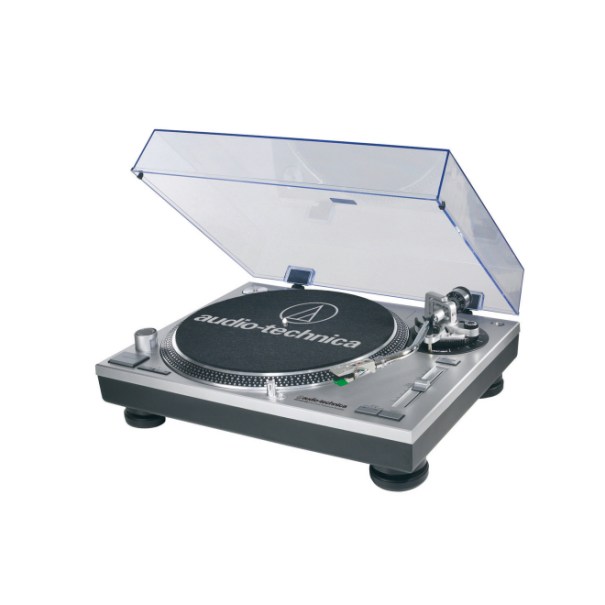
After some agonising, comparing, and general research, I took the plunge and got a new turntable — see below.

at_lp120_usb_1_sq@2x
Audio Technica LP120 USB

This is actually the fourth turntable I have owned. The first was a Dual. That was a rim drive (a technology I am not sure is still used), and had a fair bit of rumble. That was followed by a Sony direct drive. The Sony was incredibly reliable, as their products tend to be. It had some quite good features like a strobe band around the edge of the platter, so one could see whether the record was spinning at the correct speed or not. The platter itself was carbon fibre, supposedly, with funny little rubber mushrooms to support the record. That deck went through a house fire which buckled its dust cover so severely I had to take it off and throw it away. To my surprise, the deck still worked. It was still working when I reluctantly put it out on the nature strip over forty years later. So why did I get rid of it? I had no room in the stereo cabinet for a turntable.

It was succeeded by a much smaller Akai belt drive deck. This was a modest machine, sourced from Cash Converters for not very much money. I intended to use it just for ripping recordings from my few remaining LPs. I recently liberated the stereo from its cabinet and re-housed it in a new console, where I could now get at the back of it. I also got some LPs from the op shop, and a record cleaning machine. The limitations of the Akai were becoming more obvious as the quality of the vinyl improved. So when I saw the Audio Technica on sale online, I realised it would be a major improvement.

The major feature of this deck is the capacity to record vinyl records directly to a USB stick. However, I bought it for its other features:

  • direct drive (no messing about with drive belts)
  • S shaped tone arm (supposedly better for tracking toward the LP label)
  • prefitted cartridge
  • universal headshell, giving the capability to upgrade the cartridge
  • capacity to use
    • the deck’s inbuilt preamplifier, or
    • an external phono stage, or
    • the one in your amplifier. (The Luxman has a good phono stage with switchable impedance, and it seemed a shame not to use this.)
  • hydraulically damped lift control for the tonearm (although you need to lift the arm at the end of the record).

It even has a dinky little pop-up light so you see where to put the needle at the start of the disc. And, for members of the Illuminati (and the tinfoil hat brigade), one can actually play discs backwards. Yes, subliminal messages encoded onto The Beatles, David Bowie, and other such seemingly inoffensive artists, can be — ah — outed? Revealed? Whatevs.

The handful of Melodiya discs I picked up in a junk shop in St Kilda plays beautifully. I remember asking the assistant what the story was with these. Apparently no-one had picked them up from the dock after they cleared customs. Melodiya is the number one Russian record label; the discs I have date from the Soviet Union era. Material includes the Shostakovich symphony no. 5 (conducted by Maxim Shostakovich), four of the Sibelius symphonies with Rozhdestvensky, the Schumann piano concerto, and Schubert impromptus. The Russian orchestral sound is unique, particularly the brass playing — where else can you hear horns played with vibrato?

Other op shop finds, not all played on the new deck yet, include

  • Brahms: Alto Rhapsody, Wagner Wesendonck Lieder; Strauss orchestral songs, with Janet Baker
  • a Nielsen symphony
  • Debussy: La Mer; Ravel: Daphnis & Chloe suite no. 2, Pavane, with Szell and the Cleveland (extremely well played)
  • Rimsky-Korsakov: Scheherezade with Leinsdorf (pristine condition, very good performance, and a great recording — the trifecta)
  • Beethoven: Pastoral symphony with Charles Groves (pretty good, as I recall)
  • Verdi: Don Carlo with Karajan (mono, from Salzburg Festival)
  • Schubert: Unfinished symphony and Rosamunde excerpts, with Paul Kletzki and the Philharmonia Orchestra (from the 1950s, the glory days for that band — how could you go wrong?)
  • Marschner: Hans Heiling and Der Vampyr (a gift from a mate — a terrific discovery of a composer I hadn’t heard of, let alone heard. Private recording.)

Some of the best of this bunch are World Record Club pressings. There is a story worth telling here — if only the business records from this enterprising outfit are still around. I had quite a few of their records in the 70s and 80s. Only two of these old-timers survive; a volume in the complete Haydn string quartets, with the Fine Arts Quartet, and the Sibelius Violin Concerto with a Russian soloist, Tossy Spivakovsky, and the London Symphony Orchestra. The latter is one I liberated from the music department at North Sydney Technical Boys High School. (I would return it, but the school closed down in the late 60s or early 70s.) This was the recording through which I got to know this work. I always liked Spivakovsky’s performance; it made me think of a soul wailing in frozen wastes. After a wash, the disc (although pretty worn) doesn’t sound at all bad on the new deck. I can hear now, however, that the soloist is balanced extremely close. Some things just ain’t the same forty years on!

Sunday right here

This is a notice of a book I have just read, called The house of twenty thousand books, by Sasha Abramsky.

I don’t remember how I came to find out about this book. As far as I can recall, I was interested in book collecting, and whether anyone had written much about that. Reader, they have! There were bibliomanes with larger collections than Chimen Abramsky’s, but his story seemed interesting. This book was available in the Boroondara Library network — the link above points to their record — so I took a punt on it.

Chimen Abramsky grew up in the Soviet Union, the son of a rabbi. His father, Yeshevel, was arrested under Stalin’s regime, and the family was exiled to Britain when Chimen was 15. Despite this early experience of totalitarian rule, Chimen became interested in Marxism, and joined the British Communist Party. After the war he and his wife bought a house in Hampstead Heath (for 12 pounds!), which became a kind of left-wing salon. Thinkers including Eric Hobsbawm and Isiah Berlin were guests. At the same time Chimen maintained his Jewish cultural links, working in a Jewish bookstore, which also sold religious artefacts. He became a collector of books and memorabilia relating to Socialism and Hebraica, and helped develop the auction market for the latter area in particular. As this market expanded, he become an advisor to Sotheby’s in Hebraica. Chimen also had a later career as Professor of Hebrew and Jewish Studies at University College, London — this without holding a formal degree. 

The book had several themes of interest to me. As well as his book collecting and trading activities, Chimen was a leading British Jewish left-wing intellectual. After the war, Socialism was an article of faith to many idealists and progressives (including, at this time, my father). Socialism appeared to promise a fair, equitable, and peaceful society free from discrimination and exploitation. Of course, as the saying goes, someone who is not a socialist under the age of 21 has no heart, and someone still  a socialist after that age has no head. Chimen’s political views evolved in the direction of liberalism, prompted by the the persistence of anti-Semitism in the Soviet Union as well as the revelations about the show trials and prison camps.

(This isn’t specifically mentioned in the book, but I have noticed that many who were attracted to socialism at this time also either identified as Christians, like Graham Greene, or grew up in a religious family like Orwell. There was no shortage also of adherents to Communism from a Jewish background like Chimen’s. Perhaps the structure and discipline of Party membership gave the same feeling of security that religious belief had provided. For some, belief in a Socialist “heaven on earth” was not mutually exclusive of belief in the traditional life after death. In other cases, Socialism became their new religion. Chimen ceased believing in Judaism in a religious sense when he became interested in Marxism. He did not, however, wish his family to realise his apostasy, and maintained Jewish cultural traditions such as wearing the yarmulka and keeping a kosher kitchen.)

The Jewish aspect of the book was of personal interest also. Judaism has had a peripheral role in my life. As family readers will know, my father was half Jewish, originating on his father’s side. Judaism being a matrilineal religion, orthodox Jews would therefore not regard me as Jewish. My father had no religious faith, and was completely uninterested in Jewish cultural traditions. So I grew up as neither a religious nor a cultural Jew. Nevertheless, I was conscious, when growing up in the largely white-bread Australia of the 1960s, of having origins in a minority group. This was reinforced by Jews being the butt of many jokes and other stereotyping. By now people have largely stopped using “Jewish” or “Ikey” as a synonym for meanness. (This is complicated, however; the best Jewish jokes I ever heard were told to me by Dad’s friend Lionel Cohen.) 

Chimen’s was not an interesting life in its external aspects. His collection, which came to take over his and his wife Miriam’s house, is now scattered between the individuals and institutions to whom it was sold. His ideological and personal journey, however, provide a window onto the development of post-war Britain. Sasha Abramsky is the author of books such as The American way of poverty and Inside Obama’s brain . He tells Chimen’s and Miriam’s story with love, but also with the detachment and objectivity of an experienced author. Abramsky’s book is both an act of devotion to a great bookman, who happened to be his grandfather, and a fascinating record of a tumultuous time. 

You are what you eat

This is a minor rewrite of a previous post, published under the title ‘The more things change’. 

First, the breaking non-news. I saw Dr Parente (oncologist) yesterday, and the PSA is still undetectable. So everything is the same as last time. The next appointment, in May, will be a Zolodex one. This means, after seeing Dr P, I get a new implant up in the oncology ward. (I say “up” because it is on the 4th floor of Epworth Eastern. If your station overlooks a window, there are soothing views over the nearby park. I always take my noise cancelling headphones, and usually listen to ABC Classic.)

My beloved has just returned from Paris. She had a week there, mainly for work, but added a couple of days to the end of the trip. I was to go with her initially, but we decided against this. Having flown business class on our last trip, it is pretty well impossible to go back to economy. (I would have needed to keep my feet up in any case, for the lymphedema.) We would therefore have been up for another BC ticket and extra accommodation costs. We looked at tacking on a river cruise or something similar to the end of the week. At that time of year, however, there is nothing much available — it’s just too cold.  I had Dr P’s appointment to go to as well — these things can usually be changed — but I wasn’t sure that I wanted to. So I was baching for the week.

It was a strange time. We hadn’t been away from each other for that long for twenty-five years. So I decided I needed things to do. Fortunately there was no shortage of projects. We had a big sheet of plywood sitting down in the garage, about 1.2 metres square. With the help of a neighbour, I cut a roughly triangular piece out of it. This I used as a floor  underneath the vertical garden. The latter is in a corner of the courtyard which faces west and north. Being on casters, is obviously meant to go on a smooth surface, not resting on the ground as I had it. Having the plywood underneath it means I can now move it around to follow the sun, which is now much lower in the sky, and shining more on the northern wall.

This project actually took up quite a bit of time. First I had to measure up the corner. When I had a triangular bit of plywood, I removed the vertical garden and other things, then put the plywood in the corner to see if it fitted. It did — after I dug up a bunch of the native grass that is planted in the corner. (I will tell you what I did with that in a second.) The plywood has battens along two sides, so it is not lying flat on the ground. I decided I would paint it, however, to protect it just a bit from the rather boggy conditions in the corner. So I spread the tarp out on the driveway, and rustled up a miscellany of bits of cardboard packing and other things to rest it on. I had about ten litres of paint left over from painting the fence, so after pulling it out of the corner, I slapped a bit of that paint on both sides. The next day, I put it back in the corner, and arranged the vertical garden and another pot, into which I put the clump of grass which I had dug up before.

Sorted! Well, almost. The pot that holds the grass clump is slightly too small for it. (It isn’t a proper pot, but an old rubbish bucket that I have repurposed by drilling some drain holes in the bottom.) I have an old recycling bin which is a lot bigger, and is already equipped with drain holes. When I dragged this out, however, I realised it was about double the capacity of the present pot, and I didn’t have nearly enough soil or potting mix to fill it. When I shopped yesterday I bought a bag of potting mix. I expect therefore to have the grass in its new home as soon as I can get to it today.

Another little bit that needed fixing was the irrigation to the vertical garden. This is now a metre or so further away from the tap. I therefore had to cut a longer piece of hose to go on using the irrigation. When I move the vertical garden back in its original position, I will have to fit the shorter piece of hose to keep it connected to the tap. To do this easily, I will have to get some more of the click fittings — the bits that accept the male click-in portion.  Another trip to Bunnings! (Not that I mind — there is a coffee cart at the Chadstone store that sells the most insanely delicious Nutella doughnuts — giving my wanderings around its endless aisles a turbo boost.)

I have had very little success germinating seeds in the spot I originally set up for this purpose. So I am trying a new, shadier location, and giving it some more protection from slugs this time. They will have to be like Siegfried and pierce the ring of fire! In this new spot I put out dwarf beans and some more parsley and chives. The first of these have sprouted extremely vigorously — I will probably have to thin them out. So I have planted them out into the top layer of the vertical garden, where they get maximum sun, and have a trellis behind on which to grow.

The other seeds are not doing anything yet. To the ranks of these recalcitrants I added some baby beet seeds, having first soaked these in water for a couple of hours. When are you supposed to water seeds, by the way — as soon as you put them in, or after a week or so? The back of the packet doesn’t say anything about this. With the beets, however, I reasoned that, as they had been soaked in water, they wouldn’t mind a bit more straightaway. Incidentally, my helpful neighbour showed me a good way of labelling seeds or seedlings. This requires a packet of paddle-pop sticks (available from the $2 shop), on one of which one writes the name of the seed with a permanent marker. 

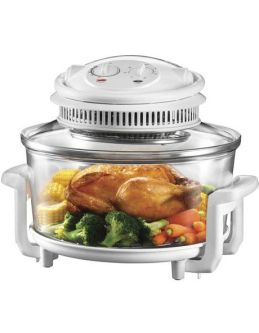
Another thing I did a fair bit of during this week was cooking. I did acquire a Sunbeam Nutri Oven for $20 in very good condition from the local op shop. Whenever I mention this device to anyone, they look puzzled, and I end up trying to describe it. A picture is worth a thousand words, however, so I am pasting in a picture below.

Nutri oven

The big ugly-looking unit on top contains the heating element. The vertical slots conceal a fan which circulates air around the food. Yes, folks, this is the predecessor to the air fryer we see advertised on late night TV. The Nutri Oven is a lot better, however, because it has a much larger capacity. Using the extension ring (not shown), you can cook a whole roast. Why bother when I have a perfectly good wall oven? The weather is chilly now, but after the hottest March on record, I was interested in something that wouldn’t heat up the whole kitchen. There is actually very little this thing can’t do! I have roasted, grilled, sauteed (sort of), and baked in it, all very successfully. You can do steaming as well, after a fashion — results with fish fillets and potatoes wrapped in foil are very good. I have also baked about half a dozen cakes and three loaves of bread. Being able to bake bread is particularly good for my beloved, who has to avoid bread containing any preservatives. (These don’t have to be listed on the packaging if they constitute less than a  certain percentage of the food.) She can now have a toasted egg sandwich, with Nuttelex, iceberg lettuce and salt. Raymond Blanc, eat your heart out!